
Exhibited Animal Care & Marine Wildlife Project
Menu: Click across the green arrows to view active and completed project stages. Consultation takes place at every stage of the project.Case for change
There is an increased demand for services in both exhibited animal care and marine rescue. To encourage the reproduction of endangered and rare species, skills are needed in animal conditioning, environment and enrichment, so that stress levels of animals are in the range that is conducive to optimal breeding. Skills are also needed in marine rescue, with Zoos Victoria’s Marine Response Unit reporting more than 472 callouts to help wildlife in the 2018-19 financial year so far.
There are also new skill requirements in exhibited animal care due to changing captivity environments, legislation and regulation, and new methods of undertaking work using technology.
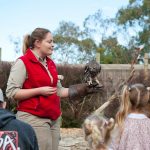
The skills standards to rescue large animals or groups of animals were recognised as a priority in the Animal Care and Management IRC Skills Forecast and Proposed Schedule of Work (see pages 29-30). The skills to rescue marine wildlife are quite different to the skills required to rescue animals on land, which were recently reviewed and developed as part of the Animal Incident Management Project. There are unique skills related to managing the safety and welfare of both people and animals involved, with minimal interference to wildlife.
The Australian Industry and Skills Committee (AISC) approved the marine rescue part of this project after a case was made about the different skills required for animal rescue on sea versus land.
 Download Project Proposal (see pages 29-30)
The exhibited animal care part of the project was approved by the Australian Industry and Skills Committee (AISC) out of the 2019-2022 Animal Care and Management IRC Skills Forecast and Proposed Schedule of Work (see pages 30-35).
Download Project Proposal (see pages 30-35)
Skills Impact and the Animal Care and Management Industry Reference Committee (IRC) will manage this project, consistent with the 2012 Standards for Training Package Development.
Register your interest in the projectSubscribe to the Skills Impact newsletter to keep informed about project updates. Make sure to select ‘Animal Care and Management’ as your industry of interest on the subscription form. |
Project Plan
Australia has one of the longest coastlines in the world and a vast landscape that is inhabited by some of the world’s rarest animals. The work of our zoo keepers, animal carers and marine wildlife responders plays an important role in supporting the health, welfare and sustainability of some of our most vulnerable animals and marine wildlife. This project covers two distinct areas of animal care, to identify skills needs for both exhibited animal care and marine wildlife response.
Those who work with animals in zoos and wildlife parks play a key role in promoting animal welfare and conservation, through breeding programs, providing information to the public and supporting scientific research. Specialist skills are needed for working with endangered animals and rare species, as job tasks vary depending on the size and type of the animal and its environment. These animals need to be mentally and physically comfortable for successful breeding and conservation programs. As such, zoo keepers and animal carers need to understand and be skilled at providing animal enrichment, as well as conditioning the animals to be handled.
Just as specialist skills are needed for different kinds of exhibited animals, a level of expertise is required for the participation and/or management of marine wildlife events and emergency situations. The skills to rescue marine wildlife are quite different to the skills required to rescue animals on land, which were recently reviewed and developed as part of the Animal Incident Management Project. During this process, industry advised that specific skill standards were needed that relate to marine wildlife events such as entanglements, strandings and pollution events.
The marine environment can present a particular challenge to humans involved in an emergency management situation. At the same time, marine life requires particular conditions to be maintained during the response, to comply with animal welfare regulations, legislation and workplace standards.
Project Scope
This project will review and update the skills standards for working with exhibited animals and develop units of competency related to managing marine wildlife incidents. Units of competency within the existing Certificate III in Captive Animals and the Certificate IV in Captive Animals will be reviewed. Skills standards in marine wildlife management and response will also be defined and captured in units of competency.
Register your interest in the projectSubscribe to the Skills Impact newsletter to keep informed about project updates. Make sure to select ‘Animal Care and Management’ as your industry of interest on the subscription form. |
Relevant Occupations
- Captive/exhibited animal carer
- Zookeeper
- Native wildlife animal carer
- Aquarist
- Senior animal keeper/aquarist
- Wildlife care operator/manager
Project Team
| Rebecca Ford | Industry Skills Standards Manager/Specialist [email protected] |
| Diana McNaughton | Industry Engagement Manager [email protected] |
| Sue Hamilton | Industry Skills Standard Contractor |
Timeline
August-October 2019
Initial scoping
October 2019
Development of draft qualifications, skill sets and units
November – December 2019
Drafts available for broader consultation
February 2020
Validation of final drafts
March-July 2020
Finalisation of Training Package components
October 2020
IRC consideration for sign-off and submission for endorsement
To be submitted at the same time as the Pet Care & Animal Training Project.
Stakeholder Consultation Process
A list of key stakeholder organisations is being developed for this project. Skills Impact will ensure contact is made with each of these organisations during the development of this project to seek their involvement and their views on the draft qualifications and units.
If you are aware of an organisation that you think should be involved, please contact the project team to ensure they are contacted by us.
Of course, all and any interested industry participants are encouraged to engage in the consultation of this project, when the draft qualifications and units are available for feedback via this webpage and workshops that take place around Australia. Consultation is not limited to the organisations on this list. This list simply helps us to identify those organisations that, because of their industry role, size or specialty, are likely to have a key interest in the development and outcomes of this project.
Opportunities for stakeholder input
Stakeholder input is appreciated throughout the duration of this project. The documents will be drafted in consultation with Subject Matter Experts and their networks. Opportunities to provide targeted feedback will occur when the draft materials are made available, which is expected in February 2020, and again for validation of final drafts which is expected in July 2020. However, your feedback is welcomed at any time, and will help us in drafting the qualification and units. It is important that training provides a skilled and flexible workforce for the future. The qualification and units need to reflect real work experience. So if you work in the sector, Skills Impact would appreciate your input and help. Please feel free to register your interest for project updates and consultation opportunities by following the newsletter subscription link below. Alternatively, please feel free to contact the project manager, Rebecca Ford on 03 9321 3526 or [email protected].
Subject Matter Experts
Subject Matter Experts will be drawn on throughout this project to help review and draft the revised units, skill set and qualifications.
If you are interested in applying to be a subject matter expert and are able to volunteer your time to this project, please email details of your expertise to [email protected].
Development
Zoo keepers, animal carers and marine wildlife responders play a vital role in supporting the health, welfare and sustainability of some of our most vulnerable animals and marine wildlife.
This project covers two distinct areas of animal care. Subject Matter Experts are being consulted in both exhibited animal care and marine wildlife response. They are being consulted to review the structure of the qualifications that align to job roles in these sectors and the content of units of competency. The skills standards that describe work practices in these areas are being updated to reflect changes in work practices, shifts in legislation and developments in technology.
Exhibited Animal Care
Those working in zoos, sanctuaries and wildlife parks need skills and knowledge in animal enrichment, nutrition, habitat design and behavioural conditioning, to support the mental and physical health of animals. Their job role also involves supporting scientific research and conservation through breeding programs and providing information and education programs to the public about environmental and animal conservation actions. Specialist skills are needed as job tasks vary depending on the size and type of the animal and how it interacts with its physical and social environment. As such, zoo keepers and animal carers need to understand and be skilled at providing enrichment to ensure the animal’s optimal psychological and physiological wellbeing. Behavioural conditioning is also important so that animals can be handled safely and with minimal stress during regular health assessments and veterinary checks.
Marine Wildlife Response
Just as specialist skills are needed for different kinds of exhibited animals, a level of expertise is required for the participation and management of marine wildlife events and emergency situations. Industry has advised that specific skill standards are needed to support marine wildlife incidents, such as entanglements, strandings and pollution events, to support the safety and welfare of the workers, volunteers and animals. The skills standards need to consider animal welfare regulations, legislation and workplace standards.
A project in Pet Care & Animal Training is also underway at the same time as this project and you may be interested in having input.
Proposed Qualification and Units for Development and Review
Feedback from Subject Matter Experts has identified a need for a unit of competency for assessing the welfare status of an animal and another to support the skills required to promote positive wellbeing for those working in animal care industries.
Units of competency within the existing Certificate III in Captive Animals and the Certificate IV in Captive Animals will be reviewed to ensure they are fit for purpose and meet current industry best-practice and regulations. Skills standards in marine wildlife management and response will be defined and captured in new units of competency.
- Review two qualifications (Certificate III in Captive Animals and the Certificate IV in Captive Animals)
- Consider the deletion of one qualification (the Certificate IV in Captive Animals)
- Review 19 captive animal units of competency
- Review 12 existing species specific units of competency
- Develop 5 new marine animal response units of competency
- Develop 2 new general animal studies units of competency to promote positive wellbeing for those working in animal care industries and to assess the welfare status of an animal
- Review 5 existing skill sets and develop 6 new skill sets
- Consider the deletion of one unit of competency (ACMCAN310 Assist with exhibit design and renovation planning), but include relevant aspects in ACMCAN304 Prepare and maintain animal housing and ACMCAN501 Contribute to enclosure and exhibit design or renovation projects (Certificate IV) as there is a lot of overlap. Feedback is needed as to whether this approach is acceptable to industry
Skills Impact is also seeking industry advice about qualification and unit titles to better reflect current industry terminology. More information to follow.
Consultation Workshops
Revised draft qualifications and units will be made available on this webpage for broad stakeholder consultation and feedback from mid-November to mid-December 2019 (under the ‘Drafts Available’ menu above). We welcome your feedback and advice on the draft skills standards during this time. Face-to-face consultation workshops will also take place across all states and territories, with a webinar planned for those unable to attend in person. Registrations for these workshops will open very soon. We encourage you to subscribe to the Skills Impact newsletter linked below to receive an alert of when registrations open and the drafts are available for feedback.
Register your interest in the projectSubscribe to the Skills Impact newsletter to keep informed about project updates. Make sure to select ‘Animal Care and Management’ as your industry of interest on the subscription form. |
Drafts Available
This project covers two distinct areas of animal care that both play a vital role in supporting the health, welfare and sustainability of some of our most vulnerable animals and wildlife.
Australia has one of the longest coastlines in the world and a vast landscape that is inhabited by some of the world’s rarest animals. Specialist skills are needed for working with endangered animals and rare species, as job tasks vary depending on the size and type of the animal and its environment.
Consultation with subject matter experts has helped to identify and define the skills standards that describe work practices of zoo keepers, animal carers and marine wildlife responders. They have been captured in draft qualifications, skill sets and units of competency.
Thank you to those who provided feedback on the draft qualifications, skill sets and units that were made available on this webpage for feedback from 8 November – 19 December 2019.
During this time, feedback was collected via the online feedback hub, 12 consultation workshops, a webinar and email. The drafts, including any comments made on the feedback hub, are still available for viewing below.
Feedback will inform the work on the final drafts which are expected to available for industry validation in April 2020.
Key changes:
- Revised qualifications: The Certificate III and IV in Captive Animals have both been revised. Feedback so far is that the Certificate IV qualification does not reflect the current skills standards and practices of industry and that many of the units within it are already covered by the Certificate III qualification. We are seeking your feedback on whether the revised qualification meets industry needs, or whether it should be deleted?
- Six new skill sets have been developed: incorporating all units within the existing Certificate IV in Captive Animals that are not covered in the Certificate III. It has also been suggested that that these proposed new skills sets could offer an alternative to the Certificate IV.
- Five new units have been developed: to address the skills and knowledge requirements of undertaking tasks related to marine wildlife responses, such as marine animal entanglements, strandings and pollution events.
- Two new units have been developed: incorporating the skills and knowledge requirements of assessing the welfare status of an animal and for promoting positive wellbeing of those working in animal care. It is anticipated that these two new units will be relevant across all animal care industry sectors, including the sectors covered by the Pet Care & Animal Training Project: General Animal Studies, Companion Animals, Pet Grooming and Animal Control and Regulation.
| Qualification code and name | Proposed changes | Link |
| ACM30X20 Certificate III in Captive Animals |
| View draft qualification |
| ACM40X20 Certificate IV in Captive Animals | Feedback from Subject Matter Experts has been that the existing Certificate IV does reflect the current skills standards and practices of industry. There is also a lot of overlap in the units of competency listed within the Certificate III and the Certificate IV. Based on this feedback, the Certificate IV has been revised to:
| View existing qualification on training.gov.au View revised draft qualification Feedback was sought on whether the revised qualification meets industry needs, or whether it should be deleted. Some feedback so far has suggested that the proposed new skills sets could offer an alternative to this Certificate IV (see below). We also sought feedback and suggestions as to whether the word ‘captive’ should be replaced by another term. |
The draft documents can be downloaded in Microsoft Word format by clicking here.
Six of the proposed skill sets include all units of competency within the existing Certificate IV in Captive Animals that are not covered in the Certificate III in Captive Animals, plus other imported units. There is a lot of overlap in the units listed within the existing Certificate III and the Certificate IV. The Certificate IV has been revised to incorporated this feedback, but it has also been suggested that that these proposed new skills sets could offer an alternative to the Certificate IV (see above). Feedback was sought on this proposal, as well as the skills sets individually.
Two new skills sets relate to marine wildlife responses.
| ACMSS000XX1 Exhibited Animal Section Management Skill Set | View draft skill set |
| ACMSS000XX2 Exhibited Animal Population Management Skill Set | View draft skill set |
| ACMSS000XX3 Animal Welfare Management Skill Set | View draft skill set |
| ACMSS000XX4 Zoological Horticulture Skill Set | View draft skill set |
| ACMSS000XX5 Exhibited Animal Visitor Experience Skill Set | View draft skill set |
| ACMSS000XX6 Zoological Exhibit Skill Set | View draft skill set |
| ACMSS000X1 Large Whale Disentanglement Skill Set | View draft skill set |
| ACMSS000X2 Lead Response to a Marine Wildlife Event | View draft skill set |
The draft documents can be downloaded in Microsoft Word format by clicking here.
| Skill set code and name | Considerations | Link |
| ACMSS00008 Native Amphibian Rehabilitation Skill Set | Are all units required in the skill set? They are large skill sets. Consider inclusion of ACMINF303 – Implement infection control in the handling and care of native wildlife | View draft skill set |
| ACMSS00009 Native Bird Rehabilitation Skill Set | View draft skill set | |
| ACMSS00010 Native Mammal Rehabilitation Skill Set | View draft skill set | |
| ACMSS00011 Native Reptile Rehabilitation Skill Set | View draft skill set | |
| ACMSS00012 Preventative Biosecurity Skill Set | Other infection control units have been developed since this skill set was developed. Are other skill sets needed? Consider inclusion of: | View draft skill set |
The draft documents can be downloaded in Microsoft Word format by clicking here.
The following general changes have been made to most units of competency:
- Application – minor edits for clarity and updated references to relevant regulations to include animal welfare.
- Performance Criteria – minor adjustments and some reordering.
- Foundation skills – removal of references to the Core Skills for Work (CSfW) performance features in the Foundation Skills table. The Australian Core Skills Framework (ACSF) skill indicators are retained.
- Performance Evidence – clarification of tasks and revision of volume and frequency requirements.
- Knowledge Evidence – edits and reordering of points relating to cross checks to performance criteria.
- Terminology changes:
- references have been broadened to captive/exhibited animals in some units
- facility replaces institution / organisation
- population management replaces collection management.
| ACMCAN301 Work within a captive animal facility | View draft unit |
| ACMCAN302 Prepare and present information to the public | View draft unit |
| ACMCAN303 Support collection management | View draft unit |
| ACMCAN304 Prepare and maintain animal housing | View draft unit |
| ACMCAN305 Assist with capturing, restraining and moving animals | View draft unit |
| ACMCAN306 Monitor animal reproduction | View draft unit |
| ACMCAN307 Rehabilitate native wildlife | View draft unit |
| ACMCAN308 Release native animals to natural environment | View draft unit |
| ACMCAN309 Develop institutional husbandry guidelines | View draft unit |
| ACMCAN311 Care for young animals | View draft unit |
| ACMCAN401 Implement collection management | View draft unit |
| ACMCAN402 Manage enclosures and exhibits | View draft unit |
| ACMCAN403 Develop animal diets | View draft unit |
| ACMCAN404 Develop, monitor and review behavioural management strategies | View draft unit |
| ACMCAN405 Design and evaluate interpretive and learning programs | View draft unit |
| ACMCAN406 Assist in establishing and maintaining a plantation | View draft unit |
| ACMCAN501 Contribute to enclosure and exhibit design or renovation projects | View draft unit |
| ACMCAN502 Develop and monitor collection management | View draft unit |
The draft documents can be downloaded in Microsoft Word format by clicking here.
Minor edits have been made to these units so far. Feedback was sought on whether the units reflect current skills standards and practices of industry and if not, what edits might be required.
| ACMSPE301 Provide basic care of amphibians | View draft unit |
| ACMSPE302 Provide basic care of birds | View draft unit |
| ACMSPE303 Provide basic care of common native mammals | View draft unit |
| ACMSPE304 Provide basic care of domestic dogs | View draft unit |
| ACMSPE305 Provide general care of domestic cats | View draft unit |
| ACMSPE306 Provide basic care of marine fish | View draft unit |
| ACMSPE307 Provide basic care of freshwater fish | View draft unit |
| ACMSPE308 Provide basic care of marine invertebrates | View draft unit |
| ACMSPE309 Provide basic care of terrestrial and freshwater invertebrates | View draft unit |
| ACMSPE310 Provide basic care of mammals | View draft unit |
| ACMSPE311 Provide basic care of non-venomous reptiles | View draft unit |
| ACMSPE312 Provide basic care of rodents and rabbits | View draft unit |
The draft documents can be downloaded in Microsoft Word format by clicking here.
Five new units of competency have been developed to address the skills and knowledge required by those people undertaking tasks related to marine wildlife responses.
| ACMAIMXX1 Participate in large whale disentanglement operations | View draft unit |
| ACMAIMXX2 Respond to marine wildlife stranding | View draft unit |
| ACMAIMXX3 Respond to wildlife welfare in marine environments | View draft unit |
| ACMAIMXX4 Participate in marine wildlife pollution event | View draft unit |
| ACMAIMXX5 Assist at marine wildlife event | View draft unit |
The draft documents can be downloaded in Microsoft Word format by clicking here.
Two new units of competency have been developed to incorporate the skills and knowledge requirements of assessing the welfare status of an animal and for promoting positive wellbeing of those working in animal care. It is anticipated that these two new units will be relevant across all animal care industry sectors, including the sectors covered by the Pet Care & Animal Training Project: General Animal Studies, Companion Animals, Pet Grooming and Animal Control and Regulation.
| ACMGASXX1 Assess the welfare status of an animal | View draft unit |
| ACMGASXX2 Promote positive wellbeing in animal care industries | View draft unit |
The draft documents can be downloaded in Microsoft Word format by clicking here.
This unit is currently an elective in the Certificate III Captive Animals qualification. Feedback from some Subject Matter Experts has been to delete this unit as there is a lot of overlap with units at the Certificate IV qualification level. Relevant content from this unit can be incorporated into the revised units titled ACMCAN304 Prepare and maintain animal housing and ACMCAN501 Contribute to enclosure and exhibit design or renovation projects. Broader industry feedback was sought as to whether this approach is acceptable.
| ACMCAN310 Assist with exhibit design and renovation planning | View existing unit on training.gov.au |
Summary of consultation to date
The qualifications, skill sets and units for competency were drafted in consultation with Subject Matter Experts via face-to-face meetings, webinars and emails during August – October 2019. Thank you to all of those who provided their feedback during these activities. Consultation has focused on the practical and hands-on expertise required by zoo keepers, animal carers and marine wildlife responders. They were consulted to review the structure of the qualifications that align to job roles in these sectors and the content of units of competency.
For further details about the drivers, scope and timeline of the project, click on the green project stage arrows above.
A project in Pet Care & Animal Training is underway at the same time as this project and you may be interested in having input.
Register your interest in the projectSubscribe to the Skills Impact newsletter to keep informed about project updates and opportunities to provide input and feedback. Make sure to select ‘Agriculture, Horticulture, Conservation & Land Management’ as your industry of interest. |
Validation
Australia has one of the longest coastlines in the world and a vast landscape inhabited by some of the world’s rarest animals. The sectors of exhibited animal care and marine response are vital to protecting the health, welfare and sustainability of these animals. Zoo keepers, animal carers, and wildlife responders require specialist skills to work with endangered animals and rare species, as job tasks vary depending on the size and type of the animal and its environment. It is important these sectors are supported by national skills standards, so that consistent high level care can continue to be provided. Thank you to those who provided feedback on the final draft units, skill sets and qualifications that were made available on this webpage for feedback from 6 April – 3 May 2020. Thank you also to everyone who had their say on the 240 hours of work placement in one draft qualification and two units during the additional consultation round between 14-27 October 2020. In reviewing the draft skill standards, the Animal Care and Management Industry Reference Committee (IRC) identified the need to consult again on the requirement for 240 hours of work placement in the Certificate III in Wildlife and Exhibited Animal Care and reference to this in two units. Individual experts from the exhibited animal care industry requested that the work placement hours be included to ensure students have real exposure to the workplace, giving them the necessary hands-on skills and knowledge to be work ready. However, the IRC raised concerns that the references to work hours could cause issues with delivery of the qualification and units. Advice was sought on whether an alternate approach would meet industry requirements. You can access the draft documents as they appeared during both of these rounds of consultation below.
The final drafts will shortly progress through to the Finalisation stage of the project which includes quality assurance of the documents and review and feedback from the State/Territory Training Authorities. They will then be forwarded to the Animal Care and Management Industry Reference Committee (IRC) for consideration and sign off, before being submitted to the Australian Industry and Skills Committee (AISC) to consider and approve for publication on training.gov.au.
Key Changes
The Certificate IV in Wildlife and Exhibited Animal Management is proposed to be replaced by the new draft Certificate IV in Animal Care Facility Management, which is being reviewed and developed as part of the Pet Care & Animal Training Project. Subject Matter Expert feedback prior to validation indicated support for this replacement, to reduce duplication of content that has been identified across the qualifications. Skill sets were revised and developed prior this stage to meet specific skill/knowledge gaps identified by this replacement. Feedback was invited on the proposal to replace the Certificate IV in Wildlife and Exhibited Animal Management with the new draft Certificate IV in Animal Care Facility Management.
Some units were merged to reduce duplication of content. The newly developed ACMAIMXX5 Assist at wildlife events was revised to remove references to marine or aquatic settings to make this unit suitable for non-marine settings, following industry feedback about the need for these skills and knowledge, which was highlighted after recent bushfire and flood events across Australia. There was been strong industry support for the new cross-sector units: Assess the welfare status of an animal and Promote positive wellbeing in self and others in animal care workplaces. Assessment conditions for Promote positive wellbeing in self and others in animal care workplaces included the requirement for assessors to have evidence of undertaking a mental health first aid program or hold equivalent related qualifications.
After additional consultation the 240 hours of work placement were removed from the Certificate III in Wildlife and Exhibited Animal Care and reference to this in two units.
More information on proposed changes is available below.
Summary of consultation to date
The units and qualifications were developed with guidance from a group of Subject Matter Experts (SMEs), with expertise in exhibited animal care, marine wildlife response, and promoting positive wellbeing (psychologists, counsellors, therapists and experienced senior veterinarians).
The broader industry were then consulted on the draft documents at two different stages – the ‘Drafts Available’ and ‘Validation’ stages. At the ‘Drafts Available” stage, 10 public consultation workshops held across Australia to include stakeholders from every state/territory during November-December 2019. One webinar was held for those who could not attend the face-to-face public consultation workshops. It should be noted that many stakeholders were affected at this time by the severe bushfires across Australia and could not attend the workshops because they were preparing to defend their properties/animals and/or evacuating animals from their sanctuaries. During the ‘Validation’ phase, stakeholders provided validation via phone, emails and surveys. Six validation webinars were then held with 21 SMEs to discuss and provide final validation of all training components.
One hundred and twenty stakeholders across various exhibited animal sub-sectors were actively involved throughout the project, including representatives from government departments, medical research facilities, zoos, aquariums, wildlife parks, and sanctuaries and wildlife rehabilitation/release carer networks.
A description of how feedback has been considered and applied at each of these stages can be downloaded below.
An additional round of feedback took place, following discussion and feedback from the IRC, as outlined at the top if this webpage.
A Companion Volume Implementation Guide is also being produced to assist industry and registered training providers (RTOs) deliver the qualification, units and skill sets. It will contain key information to assist Registered Training Organisations delivering the qualification and units.
A project in Pet Care & Animal Training is underway at the same time as this project.
Validation Documents
Changed the packaging rules and core units and added additional elective units. Added entry requirement for at least 240 hours of work placement to achieve this qualification. There is also the option to retain the Certificate IV in Wildlife and Exhibited Animal Management instead, but with the following revisions: OR View final draft with option to retain with revisions: ACM40X20 Certificate IV in Wildlife and Exhibited Animal Management Minor changes have been made to the documents following feedback on the initial drafts.
Click here to download a zipped folder of all skill sets in this group. Minor changes have been made to the documents following feedback on the initial drafts.
Click here to download a zipped folder of all skill sets in this group.
Click here to download a zipped folder of all skill sets in this group. Reworded and reordered some performance criteria. Updated foundation skills table. Revised performance evidence for clarity Updated Assessment Requirements Changed terminology from institution to facility throughout Updated performance evidence requirements Minor edits for clarity Updated Assessment Requirements Reordered Knowledge Evidence Minor changes to include plant production system throughout unit Updated content to reflect industry practices ACMCAN401 merged with ACMCAN502 to create new ACMCAN4X7 ACMCAN402 merged with ACMCAN501 to create new ACMCAN4X8 Industry feedback proposed all unit titles be changed from ‘…basic care of…’ to ‘…general care of…’. Industry consultation and feedback also led to merging the freshwater and marine fish units into one unit and the marine invertebrates and terrestrial and freshwater invertebrate units into one unit.
Click here to download a zipped folder of all skill sets in this group. Minor changes to clarify content and assessment requirements Minor changes to clarify content and assessment requirements Minor changes to clarify content and assessment requirements Minor changes to clarify content and assessment requirements Minor changes for clarity to performance criteria and assessment requirements Minor changes to clarify content Assessment requirements updated Minor changes to clarify content and assessment requirements Minor changes to clarify content Assessment requirements revised Two units merged Minor changes to make content generic to fish. Assessment requirements revised to address marine and freshwater fish ACMSPE306 merged with ACMSPE307 to create new ACMSPE3X1 Two units merged. Minor changes to make content generic to invertebrates Revised assessment requirements to address terrestrial, marine and freshwater invertebrates ACMSPE308 merged with ACMSPE309 to create new ACMSPE3X2 The Assist at wildlife events unit has removed references to marine and aquatic work settings to make this unit applicable to both terrestrial and aquatic animal incident responses. Industry feedback suggested this change in response to the recent bushfire and flooding incidents across Australia that saw many people volunteering to assist at wildlife events.
Click here to download a zipped folder of all skill sets in this group. These two units been developed incorporating the skills and knowledge requirements of assessing the welfare status of an animal and for promoting positive wellbeing of those working in animal care. It is anticipated that these two new units will be relevant across all animal care industry sectors, including the sectors covered by the Pet Care & Animal Training Project: General Animal Studies, Companion Animals, Pet Grooming and Animal Control and Regulation. Industry feedback to date indicates very strong support for these units.
Click here to download a zipped folder of all skill sets in this group. Assessment conditions require assessors must have evidence of undertaking a mental health first aid program or hold equivalent related qualifications. Qualification name Proposed changes Link ACM30X20 Certificate III in Wildlife and Exhibited Animal Care Title changed to reflect current industry terminology. View final draft qualification ACM40X20 Certificate IV in Wildlife and Exhibited Animal Management We are seeking your feedback on the proposal to replace this qualification with the Certificate IV in Animal Care Facility Management, which is being developed as part of the Pet Care and Animal Training Project. This qualification is still open for broad industry feedback and you are welcome to provide feedback to ensure it is a suitable replacement.
View draft proposed as replacement: Certificate IV in Animal Care Facility Management Skill set name Link ACMSSXXX21 Large Whale Disentanglement Skill Set View final draft skill set ACMSSXXX22 Lead response to a marine wildlife event View final draft skill set ACMSSXXX23 Animal Welfare Management Skill Set View final draft skill set ACMSSXXX24 Zoological Horticulture Skill Set View final draft skill set ACMSSXXX25 Exhibited Animal Visitor Experience Skill Set View final draft skill set ACMSSXXX27 Exhibited Animal Section Management Skill Set View final draft skill set ACMSSXXX28 Species Population Management Skill Set View final draft skill set ACMSSXXX29 Marine Animal Stranding Skill Set View final draft skill set ACMSSXXX30 Introduction to Native Wildlife Rehabilitation Skill Set View final draft skill set ACMSSXXX31 Animal Behaviour and Training Skill Set View final draft skill set Skill set name Link ACMSS00008 Native Amphibian Rehabilitation Skill Set View final draft skill set ACMSS00009 Native Bird Rehabilitation Skill Set View final draft skill set ACMSS00010 Native Mammal Rehabilitation Skill Set View final draft skill set ACMSS00011 Native Reptile Rehabilitation Skill Set View final draft skill set ACMSS00012 Preventative Biosecurity Skill Set View final draft skill set Skill Set code and name Rationale ACMSSXXX26 Zoological Exhibit Skill Set This Skill Set was developed but now Proposed for deletion. One unit that was included in this skill set, ACMCAN501 Contribute to enclosure and exhibit design or renovation projects, has been merged with ACMCAN402 Manage enclosures and exhibits, to create the new unit ACMCAN4X8 Oversee enclosure or exhibit operations. The focus of this new merged unit has changed and now covers coordinating enclosure or exhibit operations including supervising staff and managing animal care. It includes contributing to enclosure/exhibit refurbishment or renovation project (eg. more an coordinating role than an actually doing role now). Because of this, the proposed Zoological Exhibit Skill Set is no longer believed to be appropriate for an AQF 4 Skill Set. Skill Set name Proposed changes Link ACMCAN301 Work within a zoological facility Revised title. View final draft unit ACMCAN302 Prepare and present information to the public Minor changes to Performance criteria and assessment requirements for clarity and consistency. New PC3.4 View final draft unit ACMCAN303 Support species population planning and management Revised title and terminology throughout unit Reordered elements and PCs – new PC1.5, 1.6 View final draft unit ACMCAN304 Prepare and maintain animal habitats Minor edits for clarity View final draft unit ACMCAN305 Assist with capturing, restraining and moving animals Minor edits for clarity and consistency to performance criteria and assessment requirements. View final draft unit ACMCAN306 Monitor animal reproduction Unit content expanded in elements 1 and 2 and assessment requirements View final draft unit ACMCAN307 Rehabilitate native wildlife Minor edits to performance criteria and assessment requirements for clarity and consistency View final draft unit ACMCAN308 Release native wildlife to the natural environment Revised title View final draft unit ACMCAN309 Develop husbandry guidelines Updated title View final draft unit ACMCAN310 Contribute to exhibit design and renovation planning Revised title View final draft unit ACMCAN311 Care for young animals Minor edits to performance criteria and assessment requirements for clarity and consistency View final draft unit ACMCAN403 Develop animal diets Minor edits for clarity and consistency View final draft unit ACMCAN404 Develop, monitor and review behavioural management strategies Minor edits for clarity View final draft unit ACMCAN405 Design and evaluate interpretive and learning programs Minor edits for clarity View final draft unit ACMCAN406 Assist in establishing and maintaining a zoological plantation or plant production system Revised title View final draft unit ACMCAN4X7 Implement species population planning and management Two units merged to reduce duplication View final draft unit ACMCAN4X8 Oversee enclosure or exhibit operations Two units merged to reduce duplication View final draft unit Unit code and name Proposed Changes Link ACMSPE301 Provide general care of amphibians Title changed View final draft unit ACMSPE302 Provide general care of birds Title changed View final draft unit ACMSPE303 Provide general care of common native mammals Title changed View final draft unit ACMSPE304 Provide general care of domestic dogs Title changed View final draft unit ACMSPE305 Provide general care of domestic cats Title changed View final draft unit ACMSPE310 Provide general care of mammals Title changed View final draft unit ACMSPE311 Provide general care of non-venomous reptiles Title changed View final draft unit ACMSPE312 Provide general care of rodents and rabbits Title changed View final draft unit ACMSPE3X1 Provide general care of fish Title changed View final draft unit ACMSPE3X2 Provide general care of invertebrates Title changed View final draft unit Skill Set code and name Proposed changes Link ACMAIMXX1 Participate in large whale disentanglement operations Minor changes from first draft View final draft unit ACMAIMXX2 Respond to marine wildlife stranding Minor changes from first draft View final draft unit ACMAIMXX3 Respond to marine wildlife welfare Minor changes from first draft View final draft unit ACMAIMXX4 Participate in marine wildlife pollution event Minor changes from first draft View final draft unit ACMAIMXX5 Assist at wildlife events Reference to marine/aquatic removed to make broader and applicable to non-marine settings View final draft unit Skill Set code and name Proposed changes Link ACMNEW3X1 Assess the welfare status of an animal Minor changes from first draft View final draft unit ACMNEW3X2 Promote positive wellbeing in self and others in animal care workplaces Minor changes from first draft. View final draft unit
Additional Consultation
| Qualification code and name | Proposed changes | Link |
| Certificate III in Wildlife and Exhibited Animal Care | Reference to 240 hours of work placement removed. | View draft qualification |
The draft document can be downloaded in Microsoft Word format by clicking here.
| Qualification code and name | Proposed changes | Link |
| ACMEXH301 Work within a zoological facility | Reference to 240 hours of work placement removed. Performance Evidence has been strengthened and now includes a list of routine work tasks that the learner and assessor can choose from. Assessment Conditions now specify assessment must be done in a zoological facility – reference to simulated environment has been deleted. | View draft unit |
| ACMEXH303 Prepare and maintain animal habitats | Reference to 240 hours of work placement removed. Assessment Conditions now specify assessment must be done in an animal care workplace and reference to simulated environment has been deleted. | View draft unit |
The draft documents can be downloaded in Microsoft Word format by clicking here.
Register your interest in the projectSubscribe to the Skills Impact newsletter to keep informed about project updates and opportunities to provide input and feedback. Make sure to select ‘Animal Care & Management’ as your industry of interest. |
Finalisation
Australia’s vast landscape and coastline is home to some of the world’s rarest animals. The health, welfare and sustainability of these animals is supported by skilled professionals working in the exhibited animal care and marine response sectors, such as zoo keepers, animal carers, and wildlife responders.
Animals in exhibited environments require expert care, with job tasks varying depending on the size and type of the animal and its environment. Responding to marine wildlife events can be extremely dangerous and requires very specialised training to ensure safety and to meet animal welfare standards. It is important that these sectors are supported by up to date skills standards, so that consistent high level care can continue to be provided.
Throughout this project, industry has participated in the review of qualifications, skill sets and units of competency to better reflect current industry practices, terminology and skills. As a result, the skills standards for a range of job roles in exhibited animal care and marine animal response were published on the training.gov.au website within the ACM Animal Care and Management Training Package on 14 April 2020.
The new and updated components will no doubt allow students undertaking this qualification to obtain a far better opportunity and insight into the exhibited animal industry. In turn, this will make them more employable due to the appropriate and improved quality of the components, soon to be delivered.
– Anthony Molyneux, Wildlife Manager at Currumbin Wildlife Sanctuary QLD
Key Outcomes
- Existing Captive Animals (CAN) unit sector renamed to Exhibited Animals (EXH) to better reflect the work outcomes and the animal care facilities and environments where these units will be used, as well as contemporary community attitudes.
- Qualification ACM30X20 Certificate III in Wildlife and Exhibited Animal Care revised to reflect current industry practices, terminology and skill gaps, and title changed to reflect current industry terminology.
- The Certificate IV in Captive Animals superseded by the Certificate IV in Animal Facility Management (which was developed as part of the Pet Care and Animal Training Project), with a specialisation in wildlife and exhibited animal facilities. This is because research and industry feedback indicated the Certificate IV in Captive Animals duplicated the Certificate III qualification, was not fit-for-purpose and therefore did not meet the current needs of the industry.
- Following additional consultation, reference to 240 hours of work placement were removed in the Certificate III in Wildlife and Exhibited Animal Care and two core units. Performance Evidence and Assessment Conditions were strengthened to support the workplace experience necessary. Further details under the ‘Summary of consultation’ below.
- Eight new skill sets developed to address skills needs, including large whale disentanglement, animal welfare management, zoological horticulture, exhibited animal visitor experience, orphan native wildlife care, exhibited animal behaviour and training, species population management, and marine animal stranding.
- Four species specific rehabilitation skill sets merged into ACMSS00022 Native Wildlife Rehabilitation Skill Set, to reduce duplication of content.
- Fifteen captive animal units and ten species specific units updated to provide greater focus on animal welfare, enrichment, habitat design and behavioural conditioning to support the mental and physical health of animals. Some unit names have also changed to better reflect industry terminology eg. Work within a captive animal facility has changed to Work within a zoological facility. Eight units have been merged into four units, to reduce duplication of content.
- Five units developed for marine animal incident management, describing the unique skills required for responding to animal incidents in a marine environment, including entanglements, strandings and pollution events.
- Two general animal studies units developed, ACMGEN303 Assess the welfare status of an animal and ACMGEN304 Promote positive wellbeing in self and others in animal care workplaces to promote health and welfare of both animals and humans.
Summary of consultation to date
The units and qualifications were developed with guidance from a group of Subject Matter Experts (SMEs), with expertise in exhibited animal care, marine wildlife response, and promoting positive wellbeing (psychologists, counsellors, therapists and experienced senior veterinarians).
The broader industry were then consulted on the draft documents at two different stages – the ‘Drafts Available’ and ‘Validation’ stages. At the ‘Drafts Available” stage, ten public consultation workshops were held across Australia to include stakeholders from every state/territory during November-December 2019. One webinar was held for those who could not attend the face-to-face public consultation workshops. It should be noted that many stakeholders were affected at this time by the severe bushfires across Australia and could not attend the workshops because they were preparing to defend their properties/animals and/or evacuating animals from their sanctuaries. The documents were then made available for validation from 6 April – 3 May 2020. During the ‘Validation’ phase, stakeholders provided validation via phone, emails and surveys. Six validation webinars were then held with 21 SMEs to discuss and provide final validation of all training components.
One hundred and twenty stakeholders across various exhibited animal sub-sectors were actively involved throughout the project, including representatives from government departments, medical research facilities, zoos, aquariums, wildlife parks, and sanctuaries and wildlife rehabilitation/release carer networks.
A project in Pet Care & Animal Training took place at the same time as this project.
A description of how feedback has been considered and applied at each of these stages can be downloaded below.
Following these rounds of industry consultation, the documents underwent an edit and equity and quality assurance process. As part of this process, the Animal Care and Management Industry Reference Committee (IRC) identified the need to consult again on the requirement for 240 hours of work placement in the Certificate III in Wildlife and Exhibited Animal Care and reference to this in two units. The placement hours had been added to support learners in gaining the necessary workplace experience, but concerns were raised about this being a barrier to students who might import the units into another qualification, and who might be unable to gain the 240 hours of placement. An additional period of consultation took place in October 2020 to see if an alternate option was possible to provide learners with the hands on skills necessary.
This second round of consultation indicated that most stakeholders recommended removing reference to mandated work placement hours from the qualification and supported the initiative to strengthen the Performance Evidence and Assessment Conditions within the two units to ensure assessments were completed within a suitable work setting.
Industry expectations for the ACM30121 Certificate III in Wildlife and Exhibited Animal Care remains that the qualification is delivered primarily in the workplace to provide practical experience to learners and that the two units provide the best opportunity for learners to undertake work placement as part of their training, although other units may also be suitable.
The qualifications, skill sets and units were endorsed by the Australian Industry and Skills Committee (read the communique from the February 23 meeting) and State and Territory Ministers after undergoing an edit and equity and independent quality assurance process and consideration by the State/Territory Training Authorities (STAs/TTAs). A Case for Endorsement was submitted alongside the draft qualifications and units, including a rationale of why these changes are needed and evidence of industry support.
Please find below links to the final documents, that are published on the training.gov.au website.
Click here to download the Case for Endorsement
Companion Volume Implementation Guide
A Companion Volume Implementation Guide has also been produced to assist industry and registered training providers (RTOs) deliver the qualifications, skill sets and units of competency. It contains key information to help trainers adapt to any new changes, as well as additional information about the impacts of regulation and licensing implications and workplace health and safety on their training.
Click here to download the Companion Volume Implementation Guide Part 1
Click here to download the Companion Volume Implementation Guide Part 2