
‘The customer is always right’ is a motto that Australia’s food and beverage sector has taken to heart. Over the past decade, industry has been busy developing innovations in traceability, allergen control, and new products, in response to consumer interest in the origins, packaging, and contents of food.
As increased automation and updated processes are introduced, industry has been building on its arsenal of skills, meaning the kinds of expertise required to perform job roles have shifted.
Over the past year, industry representatives have contributed their time and expertise to three national projects to update vocational qualifications, skill sets and units of competency, so that future learners are equipped with the skills they need to produce high quality food and beverages.
FOLLOWING THE FOOD JOURNEY
Transparency was listed as an important food trend for 2021 in a report by food trend specialist Innova Market Insights, and is a key area addressed by the Food and Beverage Processing Skills Standards Project. As a result of industry feedback, six units of competency were developed to define skills in traceability and allergen management. This will promote development of skills to implement more transparent food and beverage processing practices. This includes providing information on allergens and ingredients, confirming the authenticity of artisan food products, and helping consumers make informed decisions on the environmental footprint of products.
Units were also developed to support other key skills needs. One unit in food specific Good Manufacturing Practice (GMP) will support training, enabling industry to continue producing high quality products. Another unit targets skills in equipment maintenance, bringing skills standards into line with today’s highly automated workplace. Two units in fruit and vegetable juices, one in dairy processing, and four in edible oils were also developed to reflect current skills needs.
Along with the development of units in these key areas, existing units have been updated to better reflect current industry practices, terminology and standards. Qualifications have also been redesigned so that they are flexible enough to be used across the industry for a range of purposes and incorporate updated and developed units.
TARGETED TRAINING
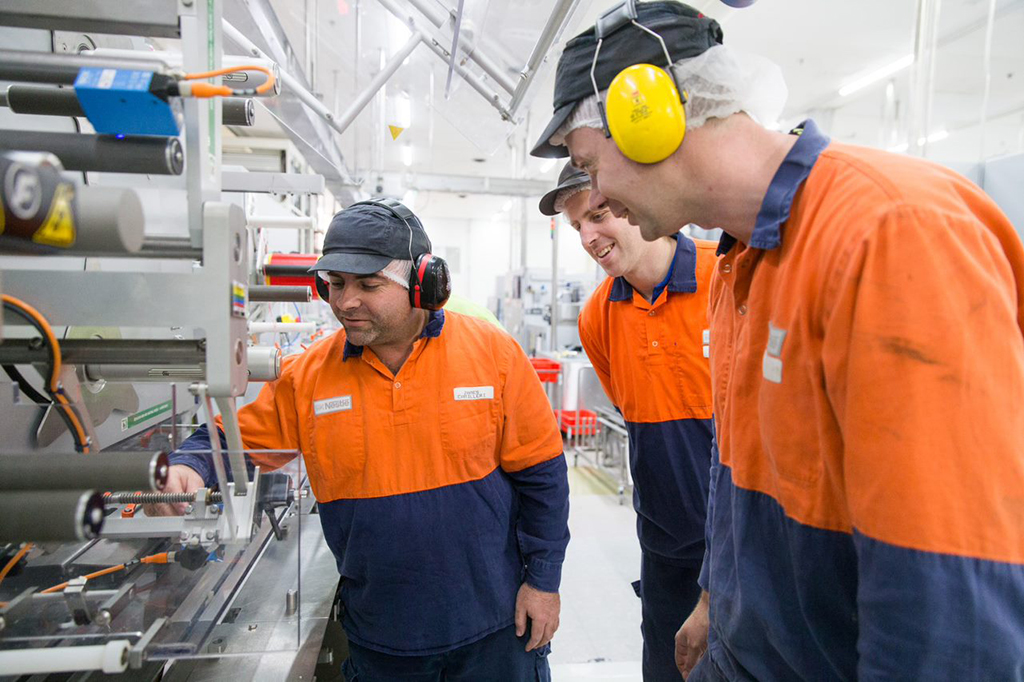
Donna Leslie, who works in Industry Training in Food and Rural Sciences for Federation TAFE says the updated qualifications will strengthen training options for the food and beverage processing workforce, as they now more accurately reflect activities performed regularly in the workplace. She particularly supports the development of specialisations within the Certificate III in Food Processing and skill sets to target key skills areas (including allergens, traceability and introduction to the industry):
“The introduction of skills sets allows us as trainers to meet the needs of our industry clients by providing training that is much more focused on their core business and their training needs. The specialisations also enable us to acknowledge the business sector in the title of their certificate and this was most welcomed by the industry, eg, Certificate III in Food Processing – Brewing,’ said Leslie.
Specialisations have been created to support the following industry sectors:
- Brewing
- Bottling and packaging
- Confectionery
- Dairy processing (cheese, powder and/or milk)
- Distilling
- Edible oils (refining or cold pressing edible oils)
- Milling
- Non-alcoholic beverages (fruit juice, cordial)
- Pet food (companion animals)
- Quality (for operator roles)
- Sales
- Stock feed (cattle, horses, sheep, pigs, poultry, fish – animals that produce for human consumption).
“The needs of industry are always evolving,” says Duncan Rowland, Executive Officer of Stock and Feed Manufacturers’ Council of Australia. “The review process has allowed us to highlight specialities such as stock feed and pet food manufacturing and develop skills standards that are fit for purpose.”
Access to these specialisations can have benefits in addition to training the workforce. Ryan Monaghan of Pet Food Industry Association of Australia notes how nationally endorsed skill standards will assist the pet food sector as it moves towards a regulated process.

GOING WITH THE GRAIN
One of the specialisations within the redesigned Certificate III is actually the result of work on another project to review the Certificate IV in Flour Milling. The qualification had not been updated in some time and experts involved in the project indicated that there were industry-supported options available outside of the VET system that appropriately met upskilling requirements at the Certificate IV level. However, a skills gap did exist at the Certificate III level, for a mill operative or miller’s assistant role, which involves many of the same skills used across the food and beverage processing industry at that level. Therefore, a specialisation in the Certificate III in Food Processing was proposed, acknowledging the key foundational skills used across the industry and providing learners with more flexible training options.
Fiona Taylor, Executive Officer at Australian Technical Millers Association of Australia says, “The Certificate III modules being proposed will provide a basic foundation of practical skills and knowledge for new participants to the flour milling industry. The program will complement the current advanced level technical milling training on offer via nabim and provide new industry participants the option to take a stepping stone approach to their education.”
FULLY BAKED
As IBISWorld reports, the plant baking sector is undergoing a period of change and Australians are spending more money on high-quality baked goods. “Over the past five years, rising health consciousness has increased demand for wholemeal, seeded, gluten-free and other breads perceived to be healthier than traditional white bread. The popularity of breads enriched with added nutrients has also contributed to growing demand for premium breads and bakery products”.
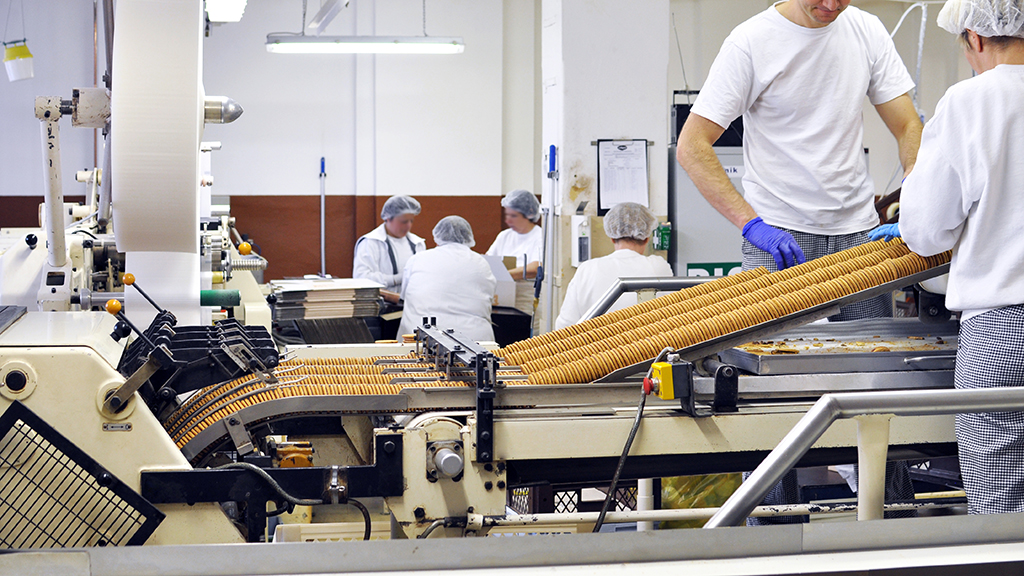
While retail baking meets some of the demand, the plant baking sector is uniquely poised to address this hunger for more baked goods, producing baked goods in large quantities. The High Volume Production Baking Project presented an opportunity to capture how these shifts in consumer tastes have impacted industry practices and terminology, while further streamlining the skills standards available for working in large scale plant bakeries.
Industry feedback has shaped the updated Certificate III in High Volume Baking (previously Certificate III in Plant Baking), which incorporates skills related to food safety, good manufacturing practice, work health and safety, traceability, setting up processing lines for production or packaging, and using numerical applications. It also incorporates the unique skills required to work in the four industry subsectors of pastry, cakes, biscuits and bread.
OUTCOMES
Thanks to the efforts of everyone involved in these projects, new and revised skills standards have been developed across the food and beverage processing sector. Up to date qualifications and skills standards are vital in supporting those wishing to pursue a career in the food and beverage processing sector, in turn supporting industry as a whole. “The Food, Beverage and Pharmaceutical Training package is a key cornerstone to the provision of skills and underpinning knowledge of process technology and supporting processes within our industry,” says Carolyn Gray of Nestlé Confectionery & Snacks. “In our case, its role is reinforced within our Industrial Agreement instrument to provide employees with skills, recognised qualifications, career progression and learning paths, whilst providing our business with a workforce with necessary skills and knowledge.”
The updated qualifications, skill sets and units are in the final stages of review with the Australian Industry and Skills Committee and State and Territory Skills Ministers. They are expected to become available for use by registered training organisations by mid-2021 and will be accessible on training.gov.au.
References
IbisWorld, (2020). “Bakery Product Manufacturing in Australia – Market Research Report.” https://www.ibisworld.com/au/industry/bakery-product-manufacturing/4227/
Innova Market Insights (2020). “Innova Identifies Top 10 Food and Beverage Trends to Accelerate Innovation in 2021.” https://www.innovamarketinsights.com/innova- identifies-top-10-food-and-beverage-trends-to-accelerate-innovation-in-2021/
*This story first appeared in food australia journal, a publication by AIFST. Words by Skills Impact.